Lenders and other creditors filed 8,010 foreclosure cases against Maryland homes from January through September, up 25% from 6,412 in the same months of 2025, according to state data. Foreclosure sales rose faster: 1,887 homes were sold at foreclosure in the first nine months of 2026, up 54% from 1,222 a year earlier, and already more than the 1,821 the state counted in all of 2025, according to the Maryland Office of Financial Regulation’s annual table.
The figures come from notices that lenders, mortgage servicers and foreclosure buyers must file with the Maryland Office of Financial Regulation, published monthly by county on Maryland Open Data. MarylandFeed added up the January through September totals for each year; the most recent update, posted Oct. 5, runs through September. The office’s Foreclosure Data Tracker publishes the annual totals; its 2025 counts of warning letters and court cases match the open data exactly.
Baltimore City had the most cases and one of the steepest rises: 2,044 this year, up 40% from 1,460. Its foreclosure sales nearly doubled, from 453 to 893, close to half of all foreclosure sales in the state. Prince George’s County had 1,614 cases, up 24%.
Up from 2025, about level with 2023
This year’s rise follows a dip, not a steady climb. Counting January through September in each year the open data covers in full, cases filed numbered 5,868 in 2022, 7,973 in 2023, 5,996 in 2024, 6,412 in 2025 and 8,010 in 2026. That puts 2026 about 0.5% above 2023. Foreclosure sales over the same months were 1,272, 1,822, 1,379, 1,222 and 1,887.
Both counts are well below earlier years. The office’s annual table shows 17,277 foreclosure cases in 2019, the first full year the notices were required, and 13,235 foreclosure sales in 2016.
Every month of 2026 has had more cases than the same month of 2025. The office’s monthly chart shows the climb starting in the second half of last year.
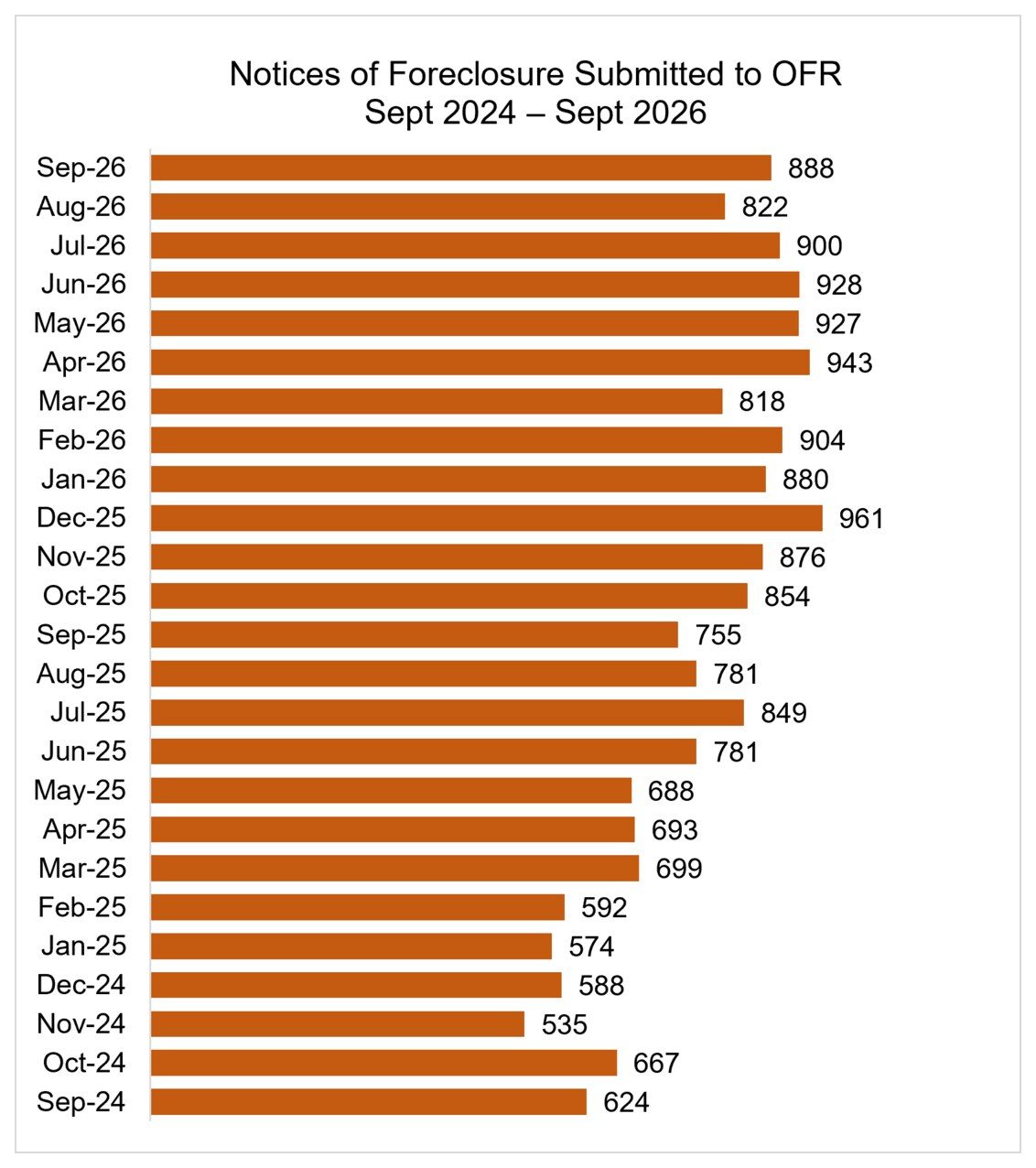
The earliest warning letters keep rising too. Notices of intent to foreclose, which come before any court case, totaled 73,795 from January through September, up 11% from 66,689, and have grown each year since 2022. September alone had 8,530, up from 7,623 in September 2025.
By county
Cases rose in 21 of Maryland’s 24 jurisdictions. Outside the biggest jurisdictions, cases rose 60% in Cecil, 46% in Harford, 42% in Washington, 39% in Carroll, 36% in Charles and 34% in Frederick. Cases fell in Calvert, Allegany and Garrett.
| Jurisdiction | Cases filed, Jan.-Sept. 2025 | Cases filed, Jan.-Sept. 2026 | Change | Sales, 2025 | Sales, 2026 |
|---|---|---|---|---|---|
| Baltimore City | 1,460 | 2,044 | +40% | 453 | 893 |
| Prince George's | 1,305 | 1,614 | +24% | 208 | 241 |
| Baltimore County | 759 | 835 | +10% | 123 | 166 |
| Anne Arundel | 554 | 621 | +12% | 71 | 86 |
| Montgomery | 460 | 535 | +16% | 51 | 88 |
| Charles | 301 | 409 | +36% | 46 | 64 |
| Harford | 198 | 290 | +46% | 22 | 30 |
| Frederick | 183 | 245 | +34% | 29 | 35 |
| Maryland | 6,412 | 8,010 | +25% | 1,222 | 1,887 |
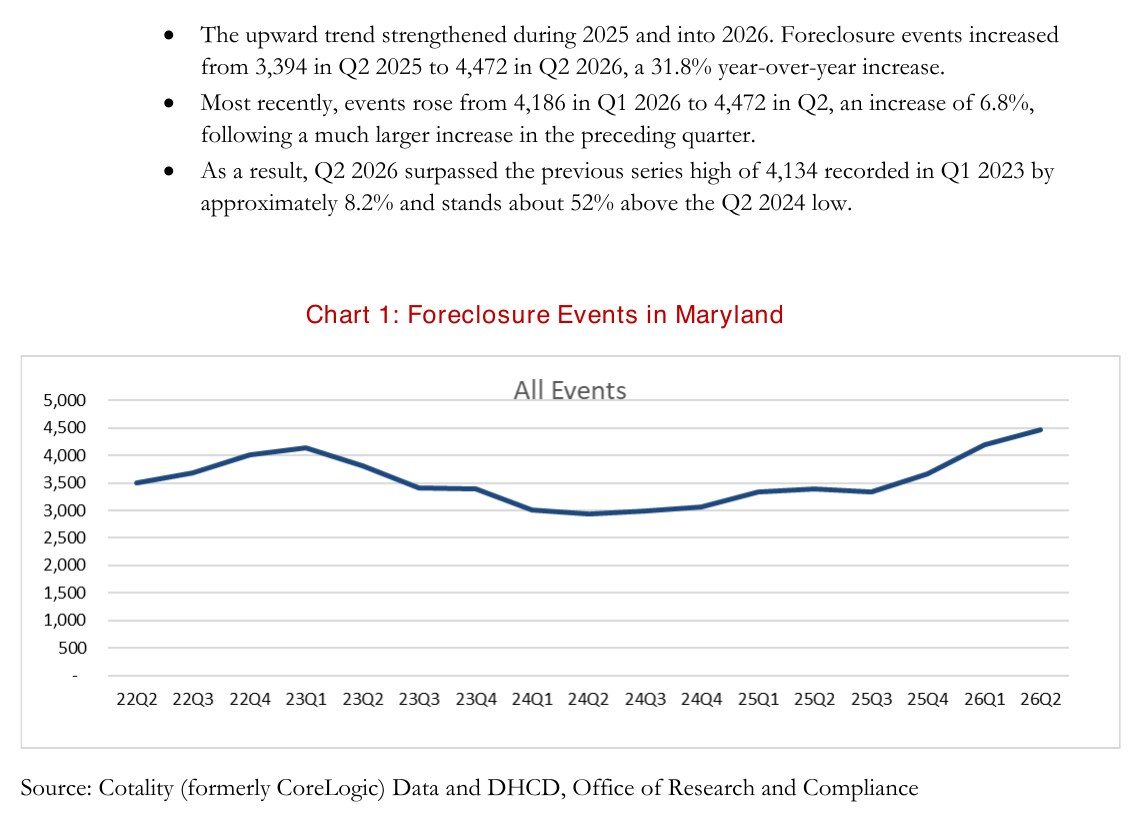
A separate state report, built on data from the private firm Cotality rather than these notices, points the same way. The Department of Housing and Community Development’s second-quarter report counted 4,472 Maryland properties with foreclosure filings from April through June, the highest quarter since its series starts in 2022, and ranked Maryland’s foreclosure rate third highest in the nation (pages 1 and 4).
What the numbers count
A notice of intent to foreclose is a letter a mortgage servicer must mail to a homeowner before starting a foreclosure, after one or more missed payments or another default. It can also come from a homeowners’ or condominium association or another creditor over unpaid fees, liens or water and sewer bills. It warns that a case could be filed in court in as little as 45 days. “Most homeowners who receive an NOI are not foreclosed upon,” the Office of Financial Regulation says.
A notice of foreclosure is registered with the state within seven days after the papers that start a foreclosure case are filed in court. Not every case ends in a sale; a court can dismiss one if the homeowner and lender reach a resolution. A foreclosed property registration is filed by whoever buys a home at a foreclosure sale, within 30 days of the sale; the buyer may be the lender or a private buyer at auction.
The office says the notices may contain duplicates and other errors and “may differ from the official foreclosure records as filed in the courts.” Tax sale foreclosures are not included.
Where to get help
The Department of Housing and Community Development’s foreclosure prevention page tells homeowners behind on a mortgage to call 877-462-7555 and start with a free, HUD-approved housing counselor; it lists counseling agencies by county and nonprofit legal services providers, including the statewide Legal Aid Bureau at 888-213-3320. State-approved counseling is always free, the department says, and it warns against anyone who charges upfront fees or asks a homeowner to sign over a deed.
Homeowners whose case has been filed in court can ask for foreclosure mediation, a meeting with the lender and an administrative law judge to look for an alternative to foreclosure. The Maryland Judiciary’s tip sheet says the request is due within 25 days of receiving the Order to Docket, the fee is $50 if not waived, and mediation can add up to 60 days to the process. The Office of Administrative Hearings, which runs the sessions remotely, holds them within 60 days of the court’s referral. If the homeowner does not appear, the case goes back to court and the sale can proceed.
Foreclosure scams can be reported to the Office of Financial Regulation at 1-888-784-0136 or the Attorney General’s Consumer Protection Division at 410-576-6550, the housing department says.